Friday, 8 January 2016

Blu Vivo 5, Vivo XL Android Smartphones Launched at CES 2016


Blu Vivo 5, Vivo XL Android Smartphones Launched at CES 2016
Blu, the US-based smartphone maker, has unveiled two new Android smartphones, the Vivo 5 and Vivo XL, at the ongoing CES 2016 trade-show in Las Vegas.
The Blu Vivo 5 will be going on sale starting next month priced at $199 (approximately Rs. 13,250). On the other hand, the Blu Vivo XL will be available this month priced at $149 (approximately Rs. 10,000). Both the phones will go on sale via Amazon and BestBuy.com in the US. The company so far has not revealed any plans to launch the new Vivo 5 and Vivo XL smartphones in more markets. The Vivo XL sports a liquid metal finish while the Vivo 5 features a full metal design.
Both the new Blu phones come with a lot of identical innards. The Blu Vivo 5 and Blu Vivo XL feature 5.5-inch Super Amoled display with a screen resolution of 720x1280 pixels and a pixel density of 267ppi. Both sport Corning Gorilla Glass 3 for protection. Both are powered by an octa-core MediaTek (MT6753) processor, run Android 5.1 Lollipop, and are said to be upgradeable to Android 6.0 Marshmallow.
One of the biggest differences between the two handsets is that the Vivo 5 features 3GB of RAM and comes with 32GB inbuilt storage, while the Vivo XL packs 2GB of RAM and includes 16GB of inbuilt storage. Both the handsets support expandable storage up to 64GB (via microSD card).
blu_vivo_xl_screen.jpg
The Blue Vivo 5 and Blu Vivo XL both sport a 13-megapixel rear camera with LED flash while also pack a 5-megapixel front-facing camera. The rear camera on the Blu Vivo 5 features PDAF (phase-detection autofocus). Both support dual-SIM and come with 4G LTE connectivity option. The Blue Vivo 5 and Blu Vivo XL pack USB Type-C ports, the highlight of both the handsets. Both the handsets are backed by a 3150mAh battery.
The Blu Vivo 5 measures 151.9x74.6x6.9mm and weighs 141 grams. The Vivo XL, on the other hand, comes with 155.2x82.2x7.5 and weighs 152 grams. The Blu Vivo XL will be come in Chrome Silver, Liquid Gold, Midnight Blue, and Rose Gold colours while the the Vivo 5 in White-Silver and Gold colours.
For full coverage from the Consumer Electronics Show in Las Vegas, visit our CES 2016 hub.

Display

5.50-inch

Processor

1.3GHz

Front Camera

 5-megapixel

Resolution

 720x1280 pixels

RAM

 3GB

OS

 Android 5.1

Storage

32GB

Rear Camera

13-megapixel

Battery capacity

3150mAh

Display

5.50-inch

Processor

1.3GHz

Front Camera

 5-megapixel

Resolution

 720x1280 pixels

RAM

 2GB

OS

 Android 5.1

Storage

16GB

Rear Camera

13-megapixel

Battery capacity

3150mAh

LeTV's Le Max Pro Smartphone With Snapdragon 820 SoC Price Tipped


LeTV's Le Max Pro Smartphone With Snapdragon 820 SoC Price Tipped
Qualcomm at its recent CES keynote address confirmed the Chinese brand LeTV's Le Max Pro will be the first handset to sport the Snapdragon 820 processor.
The smartphone however was not officially revealed at the event and was announced to be on sale in the first half of 2016. Now, a Chinese mobile site has claimed purported pricing of the Le Max Pro. According to Mobile-Dad, the Le Max Pro will be priced at CNY 3,500 (roughly Rs. 35,500).
We got a chance to play with the Le Max Pro at CES 2016, and some of the specifications we gleaned include a 6.33-inch display with a QHD (1440x2560 pixels) resolution, and 4GB of RAM. It is backed by a 3400mAh battery. It will be available 32GB, 64GB, and 128GB storage variants. The handset sports a 21-megapixel rear camera and comes with optical image stabilisation (OIS). The dual-SIM Le Max Pro supports 4G LTE connectivity option and comes with USB Type-C port. The smartphone is running Android 6.0 Marshmallow with a customised UI from LeTV on top. The Snapdragon 820 SoC was found to be clocked at 2.2GHz, which means LeTV has not under-clocked the processor from the reference clock speed.
Qualcomm during the CES keynote had also revealed that the Le Max Pro will support Qualcomm Quick Charge 2.0 technology that can charge the phone from 0 to 60 percent charge in 30 minutes.
The Chinese company hasn't officially launched the Le Max Pro and we will have to wait for the unveiling. Unfortunately, the smartphone is still not listed on the company's official store, thelemall.com. Apart from the Snapdragon 820, the Le Max Pro will also pack features such as Qualcomm's Snapdragon Sense ID ultrasonic fingerprint technology that's claimed to be more secure than capacitive sensors.
At CES, China-based LeTV also unveiled Super 4 Max65 Blade claiming it to be the "world's thinnest TV 65-inch TV."
For full coverage from the Consumer Electronics Show in Las Vegas, visit our CES 2016 hub.

Display

6.33-inch

Processor

2.2GHz

Front Camera

 Yes

Resolution

 1440x2560 pixels

RAM

 4GB

OS

 Android 6.0

Storage

32GB

Rear Camera

21-megapixel

Battery capacity

3400mAh

Wednesday, 6 January 2016

Android 6.0 Marshmallow Now Running on 0.7 Percent Active Devices: Google


Android 6.0 Marshmallow Now Running on 0.7 Percent Active Devices: Google
Google has updated its Google Play distribution data for the seven-day period ending January 4. As Google's Android 6.0 Marshmallow version rolls out to more devices, its adoption has gone up - slightly. According to Google's latest Android distribution chart, the Android 6.0 Marshmallow now runs on 0.7 percent active Android devices. This is 0.2 percent increase from the December figure of 0.5 percent.
Sharing the distribution data of different versions of Android, Google reported that Android Lollipop has a total share of around 32.6 percent of active Android devices (with Android 5.0 Lollipop running on 16.9 percent of devices and Android 5.1 at 15.7 percent) that check into Google Play.
According to the latest data, Android 4.4.x KitKat version is going down steadily in charts and now powers 36.1 percent devices compared to 36.6 percent last month - a decrease of 0.5 percent.
The Android distribution data also shows that Android Jelly Bean has a combined share of 24.7 percent - falling 2.2 percent from December's 26.9 percent. Android 4.1.x is seen on 9 percent devices (down from 10 percent), Android 4.2.x on 12.2 percent (down from 13 percent), and Android 4.3 on 3.5 percent devices (down from 3.9 percent).
android_distribution_chart_jan_7_official.jpg
Android 4.0.x or Ice Cream Sandwich, in Google's latest numbers, registered a share of 2.7 percent, down 0.2 percent from December. Android Gingerbread (v2.3.3-2.3.7) and Android 2.2 Froyo's device distribution shares are 3.0 percent (down 0.4 percent) and 0.2 percent (at the same number) respectively in the latest charts. To note, the figures are gathered from devices visiting the Google Play app, which supports Android 2.2 and above.
The OpenGL version distribution across active Android devices, on the other hand, saw OpenGL 2.0 dominating at 54.3 percent (from 55 percent last month), and OpenGL version 3.0 steadily rising to 38.9 percent (38.8 percent last month).
For full coverage from the Consumer Electronics Show in Las Vegas, visit our CES 2016 hub.

Exclusive: Galaxy S7 and S7 edge have microSD slot, pricing and screen sizes confirmed


99techture.blogspot.com

Sorry folks, but we have yet another bout of details about the Galaxy S7 and Galaxy S7 edge to share with you. These details come from a source inside the supply chain, and confirm many of the things we have heard until now.

Yes, there will be a microSD slot on both phones, as a leak earlier today reiterated. The screen sizes are also confirmed to be 5.1-inch and 5.5-inch on the Galaxy S7 and Galaxy S7 edge, which means Samsung has taken inspiration from its fiercest competitor (which took inspiration from the Korean giant when it launched a 5.5-inch version of the world’s most popular smartphone) and wants to please fans of both small and large phones at the same time. You will be able to opt for a large Galaxy S flagship instead of waiting for the next Note or settling for a non-flagship phablet, or give up the Edge screen to get a smaller screen size.

In terms of pricing, there isn’t much change compared to the Galaxy S6 or Galaxy S6 edge/S6 edge+. The 32GB models of the S7 and S7 edge will be priced at Euro 699 and 799 respectively (the 64GB models should be priced around Euro 70-80 higher, though our source didn’t say so). The two phones will be announced in February; our source says they will go on sale during the same month, which would be faster than even the Note 5 and S6 edge+ if the rumored February 20 date of the Unpacked event is correct.

We tend to believe what our sources tell us, and while we are willing to do the same in this case (this source has offered solid information in the past), don’t forget to keep the salt container handy. We are working to get more information on Samsung’s next big (and bigger) thing, and will continue to report on information from both ours and others’ sources.

Tuesday, 5 January 2016

Leaked image shows the Galaxy S7 with a 12.2 MP camera, 5.7-inch model


99techture.blogspot.com

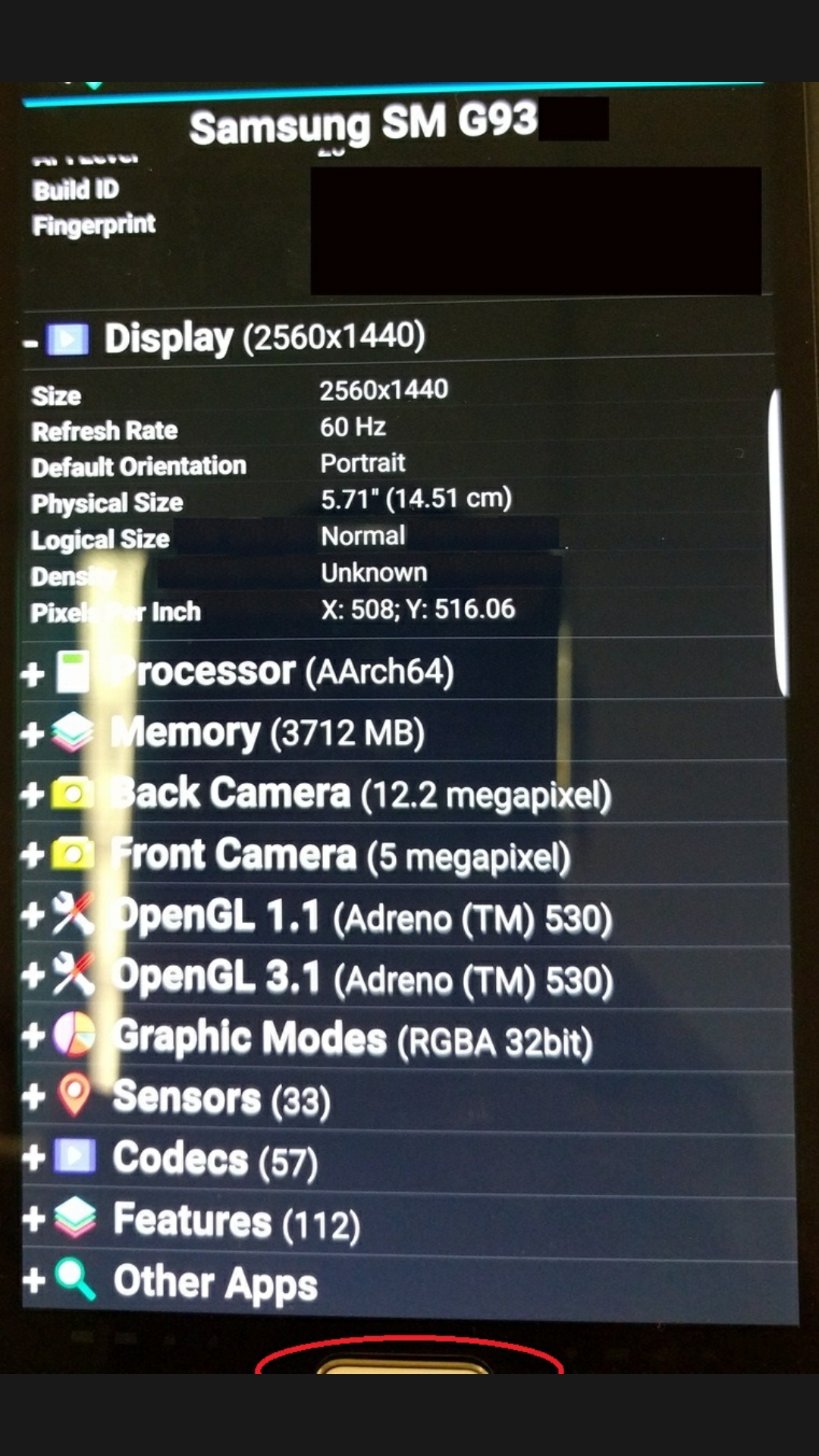
2016 has begun, and the launch of Samsung’s next flagship smartphone will soon be upon us. The leaks are expected to start flowing in greater numbers over the next few weeks, and an image published on the web over the weekend has revealed a few specs of the 5.7-inch Snapdragon 820-powered variant of the Galaxy S7.

Let’s focus on the 5.7-inch part – rumors have said that Samsung could launch the Galaxy S7 in two different sizes. The last leak suggested a 5.5-inch version, but these specs suggest the Korean giant will stick to its traditional 5.7-inch displays. It has also been said that the company could launch three different models of the S7 with 5.1-inch, 5.5-inch and 5.7-inch displays, but we are inclined to believe there will only be two models upon launch. One could be a regular S7 with a 5.1-inch display, and the other an S7 edge with a screen that is 0.6 inches larger.

As for the camera, the image shows a 12.2-megapixel sensor for the device, supporting a previous rumor. This sensor is expected to have a larger pixel size than Samsung’s current 16-megapixel cameras, which is something we hope is true if the megapixel count will be taking a dive. However, Samsung’s recently announced Britecell sensor has a smaller pixel size, so we will have to wait and see what specifications the Galaxy S7′s camera will carry. The front camera is listed as a 5-megapixel sensor; this will hopefully change to 8-megapixel on the final unit, similar to the recently launched Galaxy A9.

The image also lists specs that don’t surprise – 4GB of RAM, Quad HD display resolution, a fingerprint sensor, and the Snapdragon 820 CPU. At this point, there is just too much information on the S7 swirling around, but things should get clearer as we move closer to Samsung’s Unpacked event. The Galaxy lineup saw drastic changes in 2015, and it’s possible Samsung will be making things more interesting this year.

Saturday, 2 January 2016

Reminder: All Samsung flagships launched in 2014 and later will get Marshmallow

99techture.blogspot.com

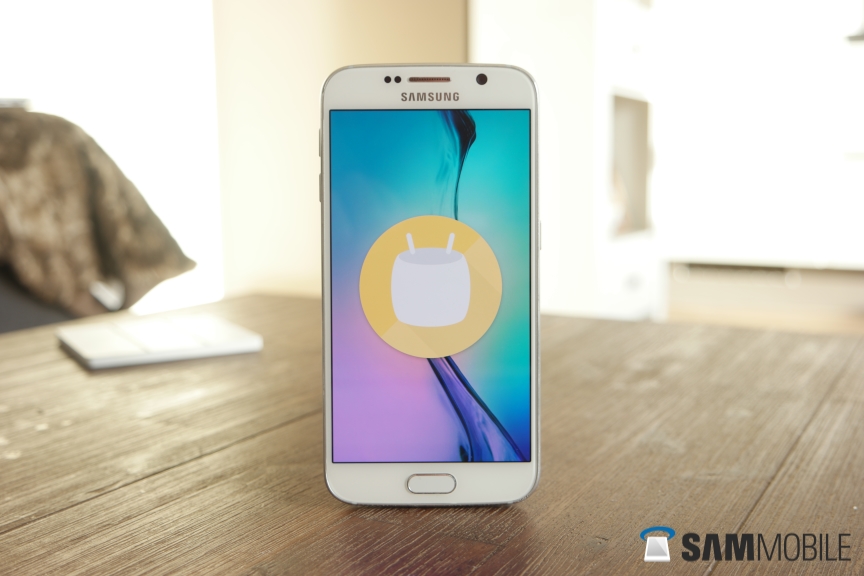
Samsung launched a beta program for Android 6.0 Marshmallow on the Galaxy S6 and Galaxy S6 edge last week, and we have been seeing a lot of comments from our readers about whether the Galaxy S5 or other Samsung flagships will be getting the Marshmallow update. We thought it would be a good idea to answer that question by reminding everyone that Samsung updates all its flagship devices to two major new versions of Android.

It’s a tradition the company has always followed, and every flagship since the original Galaxy S has gone from the version of Android they came with out of the box to two newer versions. For the Galaxy S5, that’s Android 6.0, as it came out with Android 4.4 KitKat and Lollipop has been its only big update until now. As we had revealed a couple of months earlier, work on Android 6.0 for the S5 has already started, and the same goes for the Galaxy Note 4 and Galaxy Note Edge. Variants of these devices, like the Galaxy S5 LTE-A or the Galaxy S5 or S6 Active, will also be in line for 6.0.

Basically, if you buy a Galaxy flagship, you can rest assured your device will see the two major versions of the OS that come out after the phone’s launch. Of course, there’s never any information on when Samsung will roll out an update, but any flagship launched after 2014 is sure to get at least Android 6.0 before their maker ceases major software support.

While you’re waiting, check out Marshmallow on the Galaxy S6 and Galaxy S6 edge here!

Friday, 1 January 2016

7 Galaxy S7 predictions – ClearForce display, Snapdragon 820, 20MP camera and more!

BY 99techture.blogspot.com

Share 


The Galaxy S7 is so close we can almost taste it.

We expect Samsung to introduce the device in February, likely during Mobile World Congress where it has unveiled earlier Galaxy S devices. The 2016 flagship Galaxy S7 has been the subject of many rumors recently, so we figured we’d compile a bunch of those into a single list, full of predictions for the Galaxy S7.

So what can we expect from the Galaxy S7?

Without further ado, here are our 7 predictions.

1. ClearForce Display

Rumor has it Samsung will outfit the Galaxy S7 with a ClearForce display. ClearForce is new technology developed by Synaptics that will offer similar features to Apple’s 3D Touch, and Samsung apparently has an interest in using it.

ClearForce may enable new options for scrolling, panning and zooming, editing photos and other features that can be enabled with an additional level of pressure. The Galaxy S7 could certainly benefit with these additional controls and we hope to see the new tech used. Otherwise, we’re still expecting a 2560 x 1440-pixel AMOLED screen.

2. Snapdragon 820 / Exynos 8890 Processors

Samsung shipped the Galaxy S6 with Exynos processors in 2015, ditching Qualcomm altogether. That will apparently change in 2016 with the Galaxy S7, as Samsung returns to offering both Exynos and Snapdragon versions of its flagship.

Rumors point to deployments of models with the Snapdragon 820 in markets like the United States, while others will employ Samsung’s in-house Exynos 8890 processor. Expect both to offer large performance increases over last year’s Exynos 7420.

3. New cameras

Back in November, Samsung unveiled its newBRITECELL camera technology that we expect some form of the technology to make its way to the Galaxy S7, offering improved low-light performance.

Right now we’re expecting a 20-megapixel camera with RAW support and an 8-megapixel ISOCELL front-facing camera. One rumor suggests Samsung is going with a”Duo Pixel” camera, perhaps offering two different lenses, which we’ve seen from other OEMs such as HTC. A patent by Samsung pointed to modular camera pieces, too, though there hasn’t been overwhelming evidence that we’ll see that in the Galaxy S7 just yet.

One thing is clear: expect big bumps in camera performance.

4. At least two models

We predict Samsung will launch at least two Galaxy S7 models, including a 5.2-inch option with a flat display and a larger 5.5-inch Galaxy S7 Edge with a curved screen.

The most recent rumor, which stems from a leak from a case maker, suggests Samsung may in fact have four models prepared, including a Galaxy S7, a Galaxy S7 Edge, a Galaxy S7 Plus and a Galaxy S7 Edge Plus. The two larger devices are said to pack 6 inch displays, which means users may ultimately have a choice between three different screen sizes. A leaked GeekBench benchmark also suggested we may see models ship with either 3GB or 4GB of RAM, depending on the market.

Choices!

5. Similar design

Why fix something that isn’t broken?

Samsung’s Galaxy S6 and Galaxy S6 Edge are beautiful phones, there’s no way around that, and we think Samsung will largely keep the design language intact. Expect more shiny metal and reflective surfaces, and similar button layouts to last year’s model. We called this a “page out of Apple’s book” when we covered the rumor, and it makes sense: Apple sticks to the same design for two years while upgrading internals and software, and it seems to work. There are plenty of ways Samsung can attract consumers, particularly with all of the other items on this list, none of which would require drastic changes to the design.

One change would need to be made, which brings us to the next point.

6. microSD card support

Rumors are suggesting Samsung is going to add a microSD card slot to the Galaxy S7, and we hope it happens. This would require a small tweak to the design, which we covered above, but there’s plenty of room for a microSD card tray.

Now that Android 6.0 Marshmallow allows you to format microSD cards as internal storage, consumers could save a lot of money and buy the entry-level 32GB Galaxy S7 and then pop in a microSD card to expand the storage to their heart’s content.

This is probably the one feature I’m most excited for… if it happens.

7. USB-C

The industry is making a clear shift to USB-Cand Samsung will likely offer the new standard. In fact, Samsung was one of the first smartphone OEMs to jump to USB 3.0 for the Galaxy S5 before it turned back to USB 2.0 with last year’s Galaxy S6.

USB-C should help with faster charging, which Samsung is already exceptionally good at, while also enabling much speedier data transfer speeds. There are other small benefits, too, like the reversible head that makes it much easier to plug it in when you can’t see the USB port at night.